An AI tool can spin up a YouTube thumbnail in seconds, but the tool matters less than the rules it follows. The thumbnails that win in 2026 share the same traits: one clear idea, a face with real emotion, under four words, and hard color contrast. Get those right and the click-through rate climbs; get them wrong and the slickest AI render still gets scrolled past. Here are the AI tools worth using and the practices that actually move the number.
Thumbnails feed straight into reach, so pair this with our guide on how the YouTube algorithm treats AI channels, where click-through is a core ranking signal.
Do AI thumbnails actually get more clicks?
They do when they follow what the data already shows. Thumbnails with a human face pull roughly 35% higher click-through than faceless ones, and an expressive face adds another 20 to 30% over a neutral one. Contrast counts just as much: high-contrast color pairings have shown around 30% higher CTR than muted designs. The gains are real money, since channels holding a 6 to 10% CTR grow more than twice as fast as those stuck below 4%.
AI does not change those rules, it just makes hitting them faster. A generator can produce ten variations of a shocked face on a dark background before you would have finished one by hand. That speed only helps if you steer it with the principles below, rather than accepting the first pretty image it returns.
One caveat separates a click from a letdown. The thumbnail has to match the video, or the extra clicks turn into early exits that the algorithm reads as a bad sign. AI makes eye-catching frames easy, which also makes clickbait easy, so promise something the video actually delivers. A high CTR with low watch time ages worse than a modest CTR that keeps people watching.
The best AI thumbnail tools in 2026
Pick by how you work, not by a leaderboard:
- Canva AI thumbnail maker: fastest for template-driven design with your brand assets, good when you want structure over a blank canvas.
- CapCut AI Design: reads a prompt, generates the visual, and refines the layout, handy if you already edit video there.
- Thumbmagic and Pikzels: dedicated YouTube thumbnail tools built around CTR rather than general image generation.
- Leonardo or a frontier image model: best for a custom character or scene templates cannot give you, at the cost of more prompting.
Most creators settle on two: a dedicated thumbnail tool for speed and a general image model for the occasional custom shot. The tool is only a means to the rules, so do not overthink the choice.
Cost rarely decides this. Most of these run a free tier that covers a few thumbnails a week, with paid plans mainly buying volume and higher resolution. Canva's thumbnail maker, for instance, is free to start, so you can test the workflow before paying for anything. Spend on a tool only once you know thumbnails are your bottleneck.
A quick note on faces: your own photo, cut out and dropped onto an AI background, often beats a fully AI-generated face, which can still read as uncanny up close. For a faceless channel, a consistent AI character works fine, as long as it stays the same person across videos so viewers start to recognize it.
What makes a thumbnail get clicked?
The winning pattern is consistent enough to treat as a checklist, and it matches the designs that consistently earn clicks:
- One idea only. Thumbnails with more than three distinct elements see about 23% lower CTR, because the eye gives up. Say one thing.
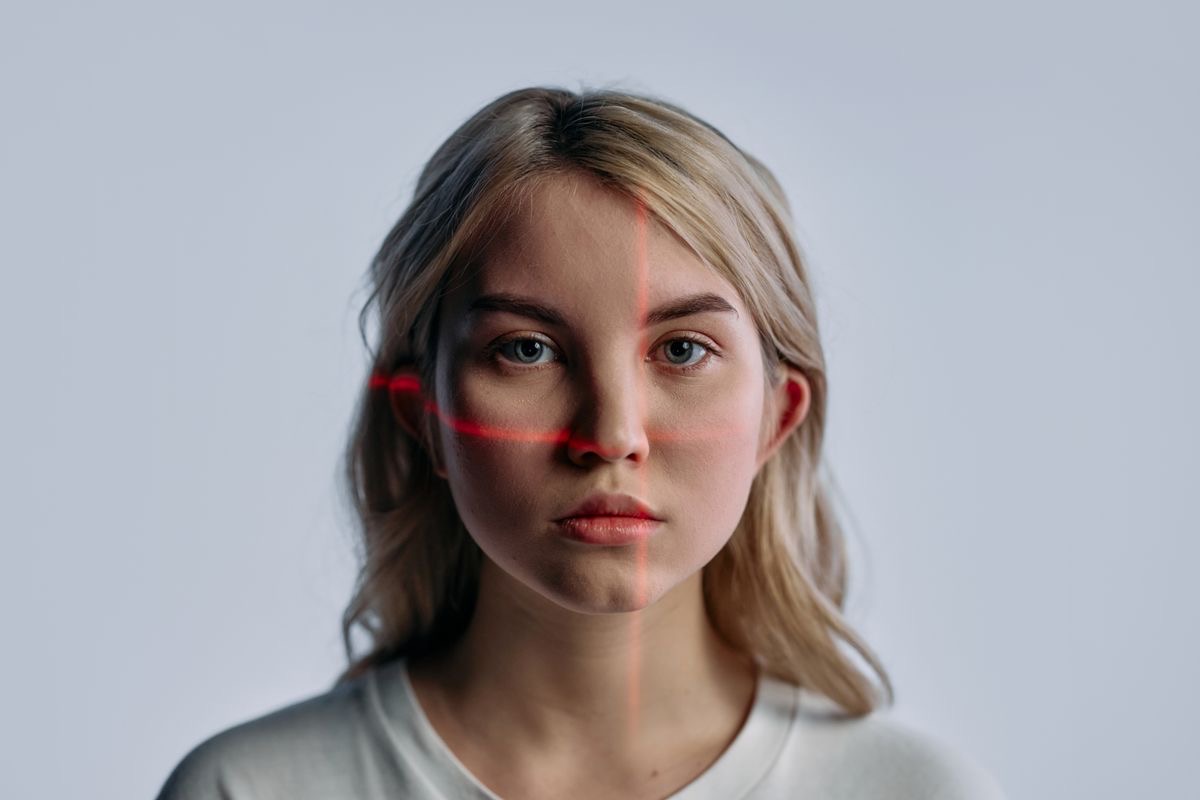
- A face with emotion. Surprise or curiosity beats a calm expression by a wide margin, which is why exaggerated reactions dominate top thumbnails. Even faceless channels can use a reacting character.
- Under four words. Fewer than four words lifts clicks by roughly 30%, and staying under twelve characters performs best. The text is a headline, not a caption.
- Hard contrast. A bright subject on a dark background, or complementary colors, so the frame pops in a crowded feed.
- Made for a phone. Render at 1280x720 and check it at thumbnail size, because most viewers meet it small.
Run any AI output through that list before you publish. If it fails two of the five, regenerate rather than settle for it.
The fastest wins often come from removing, not adding. Thumbnails that underperform tend to cram three faces and a paragraph of text into one frame, then leave the creator wondering why nobody clicks. Cut until one subject and one message remain. A thumbnail that loses to a competitor usually lost on clarity at small size, not on artwork.
A prompt and workflow that works
Prompt the model with the rules baked in. Something like "bold thumbnail, one shocked human face on the left, dark background with a bright accent, empty space on the right for text" gives the AI the structure it needs, instead of a vague "make a thumbnail for my video." Generate a batch rather than a single image, so you have real options to compare.
Then add the words yourself in an editor rather than trusting the model to spell them. AI still garbles text inside images, so a clean overlay in Canva or your editor avoids the most common giveaway. Keep the layout consistent across your channel too, because a recognizable style lifts clicks from returning viewers on its own.
Generate in threes at least. One prompt with three faces or three color treatments gives you a real test set instead of a single guess. Save the versions that lose, too, because a face or color that flopped on one video sometimes wins on another, and a small swipe file of your own results beats any template pack over a few months.
How do you know it is working?
Test, do not guess. YouTube lets you try different thumbnails and read the CTR each one earns, so treat every upload as a small experiment. The strongest method is sequential: take the winning element from one test and make it the baseline for the next, which compounds over time, with some channels reporting a 150 to 200% CTR lift across several cycles.
Keep each test honest by changing one thing at a time. Swap the thumbnail while the title stays put, or the reverse, so you know which lever actually moved the number. Give every version enough impressions to mean something rather than calling a winner after an hour. Over a few months this turns guesswork into a system that reliably clears the benchmark.
Judge the result against a benchmark, not a feeling. A CTR in the 6 to 10% range is healthy for most niches, and anything under 4% is a signal to rework the thumbnail before the video, because the algorithm rarely pushes a clip that no one clicks. To make that reach pay off, our faceless YouTube playbook and the guide on keeping AI videos monetized cover what happens after the click. You can confirm the current size and format rules in YouTube's custom-thumbnail guidelines.
Want the whole system, not just the thumbnail? The Future Tech program teaches AI video and content from the first idea to a channel that grows, packaging included.